
 Español
 Français
 Deutsch
 Italiano
 Português
 Cardiology
 Acute Care
 Private Clinic
 Patient Monitoring
 Emergency department
 Intensive care unit
 Neonatal
 Perioperative care
 Rural Healthcare
 Keeping caregivers safe
  Care Team Performance
 TeamUp Strategies
 Runway Architecture
 Decisive Intelligence
 Clinical Informatics
 Patient Measurement
 Clinical education
 Clinical Tech Toolbox
 eLearning
 Spacelabs Ambulatory ECG Analyser Course
 Technical training
 Webinar Hub
 Product manuals
 Cleaning instructions
 Eclipse Utility Tool
 Supplier change request
 ABP monitoring supplies
 Batteries
 Bispectral Index (BISx)
 Capnography and multigas
  Cardiac output supplies
 ECG supplies (AAMI)
 Holter ECG supplies
 IBP supplies
 NIBP supplies
 Paper supplies
 Pressure Infusion supplies
 Resting ECG supplies
 SpO2 pulse oximetry
  Temperature supplies
 90217A Ultralite
 AriaTele
 CardioExpress SL18A
 DM4
DM4 Eclipse Mini
 Eclipse Pro
 Evo
Evo Lifecard CF
 Qube and Qube Mini supplies
 Xprezzon supplies
 Contact us
 Regional contacts
 Our heritage
 Senior management
 News and Events
 Patents and trademarks
 Quality and Sustainability
 Careers
 Terms and policies
Highlights:
-
33.9% reduction in 24-hour ICU readmissions
-
32.7% reduction in 72-hour ICU readmissions
-
22% decrease in cardiac arrests outside the ICU
Achieved through proactive surveillance and rounding using the Rothman Index by Blessing’s High Acuity Response Team (HART)
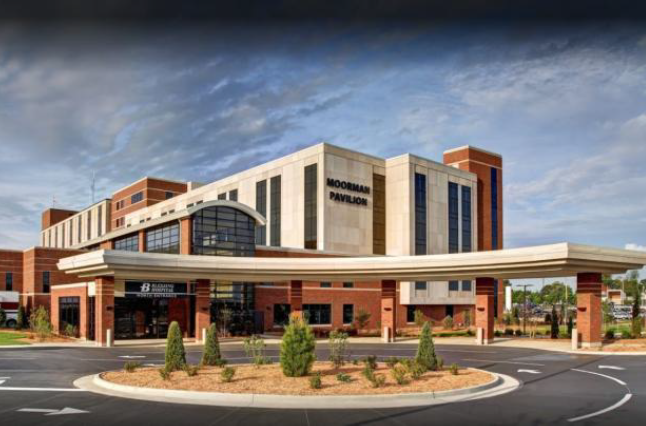

Located in Quincy, IL, Blessing Hospital is the largest and oldest member of the Blessing Health System which also includes Blessing Corporate Services, Illini Community Hospital, Blessing Health Hannibal, Blessing-Rieman College of Nursing & Health Sciences, Denman Services Inc., and The Blessing Foundation. It serves over 400,000 people across 21 counties in Illinois, Missouri and Iowa. A not-for-profit community institution since 1875, Blessing has built its reputation on a foundation of “True Human Connection,” delivering not-for-profit, community centered care.
Objective
Blessing Health set out to enhance early detection of clinical deterioration and prevent adverse events through a restructured high-acuity care model, leveraging experienced critical care nurses and the Rothman Index® (RI).
Challenge
Before the COVID-19 pandemic, Blessing’s High Acuity Response Team (HART)—comprised of experienced critical care nurses—had achieved notable success in reducing unplanned ICU transfers and code blues outside the ICU by using proactive surveillance supported by the Rothman Index.
However, during the pandemic, the HART nurses were reassigned to staff a second ICU, temporarily pausing their proactive surveillance model. Once COVID pressures eased, Blessing returned to a single ICU and recognized a renewed opportunity to optimize HART’s impact.
Solution
Blessing restructured and strengthened the HART program through several strategic improvements:
- Defined the HART nurse role with clear expectations and qualifications
- Closed staffing gaps to ensure 24/7 coverage
- Fully integrated the Rothman Index into rounding and surveillance routines
- Created a “HART List” for high-risk patients—those recently transferred from higher acuity units, post-event, or flagged via RI trends
- Prioritized surveillance in the Progressive Care Unit, where patient conditions can rapidly deteriorate
Results
As a result of this structured return and enhanced workflow, Blessing reported measurable improvements in patient outcomes:
- 24-hour ICU readmissions dropped by 33.9%
- 72-hour ICU readmissions dropped by 32.7%
- Cardiac arrests outside the ICU decreased by 22%
- HART consults increased by 35.7%, reflecting greater integration and impact
Conclusion
By refining its HART program and embedding the Rothman Index into daily clinical practice, Blessing Health transformed patient monitoring into a proactive, team-based safety net. The results demonstrate not only better outcomes but also a scalable model that blends compassion with precision.
“The RI Helps us stay ahead of patient decline—we’re not just reacting, we’re preventing.”
Laura Weigand, BSN, RN, CCRN, TNS; Supervisor HART/ Sepsis RN Coordinator, Quality & Performance Improvement